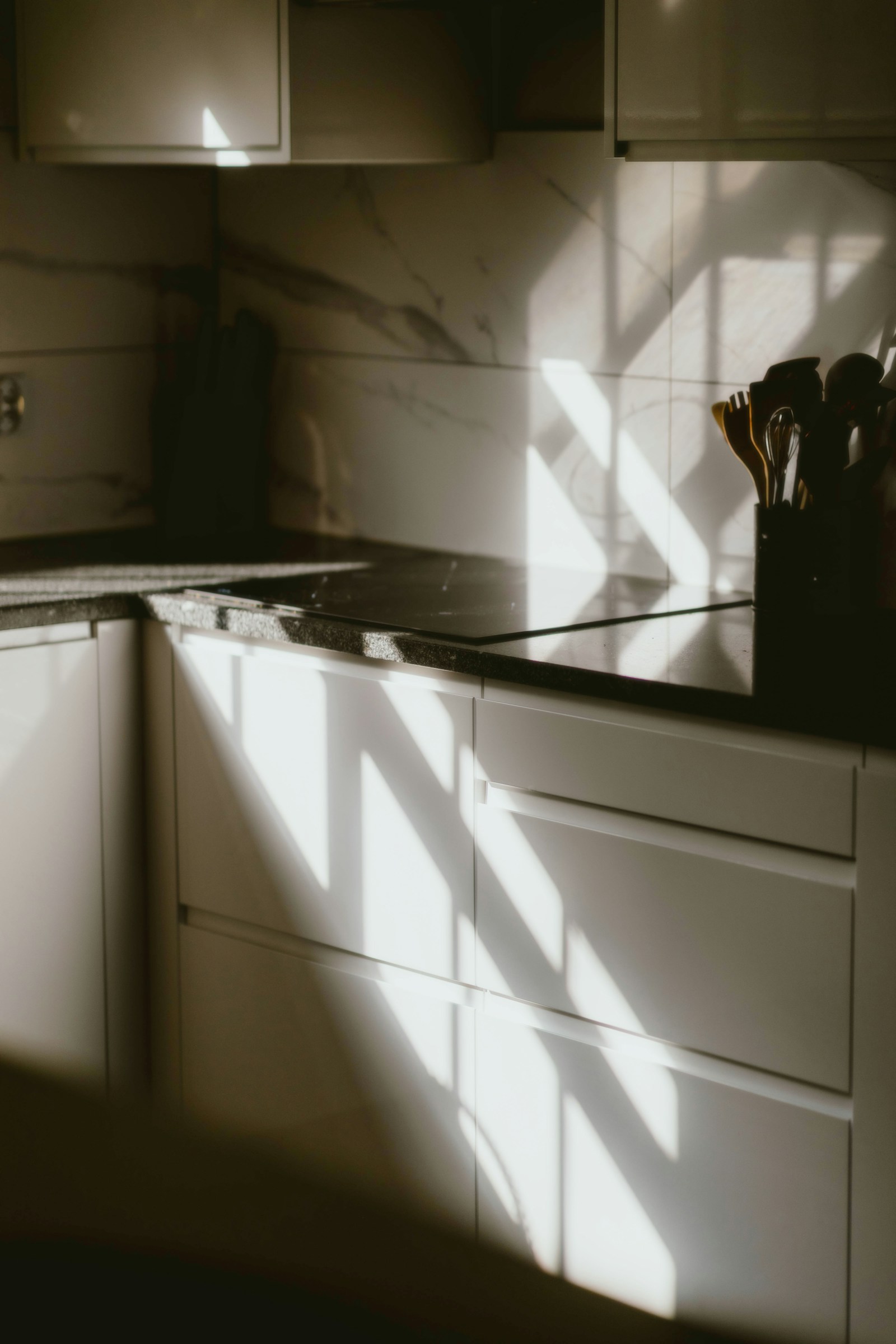
Countertop Stains In A Rental Kitchen: What Comes Out
Most rental counters are laminate, which stains one way, damages another, and cannot be sanded back like the stone in a showroom photo.
Know what you have first
Most apartment kitchens have laminate: a printed surface bonded to a particleboard core, with a visible brown line at the front edge if you look closely. Solid surface is less common, stone is rare in rentals, and butcher block appears occasionally in renovated units.
It matters because the advice for each is different and most of what circulates online is written for stone. Sanding, polishing, and heavy scrubbing all belong to other materials, and on laminate they take the printed layer off, which turns a stain into damage.
Laminate: what usually comes out
- Coffee, tea, and tomato: a thick baking soda paste, left an hour, wiped with a soft cloth rather than scrubbed.
- Grease and oily film: warm water with dish soap and dwell time, then a dry buff.
- Marker or ink: a little rubbing alcohol on a cloth, tested first on a hidden section near the wall.
- Hard water marks near the tap: white vinegar on a cloth, not left to pool at the seam.
- General dullness: a second wash rather than an abrasive, since most dullness is film rather than wear.
Bleach is worth skipping on coloured laminate. It can lighten the print unevenly, which leaves a pale patch that looks worse than the stain and is genuinely permanent.
What is permanent on laminate
- Heat marks from a hot pan set down directly, which are burns in the surface rather than stains.
- Knife scores, since the printed layer is cut through.
- Swelling and lifting at the front edge or around the sink cutout, where water reached the particleboard core.
- Peeling at a seam, which usually starts once the core has swelled.
- A pale patch from bleach or an abrasive.
The sink cutout is where the real damage lives
In almost every rental kitchen the worst counter damage is within twenty centimetres of the sink, and it is water rather than staining. Water sits along the edge of the sink, gets under the laminate at the cutout or at a failed bead of sealant, and swells the core underneath.
That means the useful habit is drying the sink surround rather than cleaning it harder, and the useful check at move-in is running a finger along that edge for softness or lifting. If it is already swollen when you arrive, photograph it that day, because it is a common charge at move-out and it is almost always older than the current tenancy.
Butcher block, if you have it
Wood behaves oppositely to laminate: it tolerates sanding and it does not tolerate standing water or harsh products. Wipe spills promptly, avoid soaking, and use a mild soap rather than anything strong.
Do not oil or refinish a rental counter without asking. It is a change to the surface rather than cleaning, and a well-meant refinish in the wrong product is harder to resolve than the marks it was covering.
Prevention that costs nothing
A board for cutting, a trivet for anything hot, and drying the sink surround. Those three cover the entire list of permanent damage above, and none of them are effort in the way that removing a stain is.
Counters, backsplash, and the sink area get their own pass in deep apartment cleaning and are on the inspection list in move-out apartment cleaning, where the distinction between a stain and a burn decides whether it is a cleaning line or a damage line.
Good answers before a cleaner shows up.
How do I get coffee stains out of a laminate countertop?+
A thick baking soda paste left on for about an hour, then wiped with a soft cloth. Avoid scrubbing and avoid bleach on coloured laminate, which can lighten the print unevenly.
Can heat marks be removed from a countertop?+
On laminate, no. A hot pan mark is a burn in the surface rather than a stain, and nothing removes it. A trivet is the only fix, applied before it happens.
Why is my countertop swollen near the sink?+
Water has reached the particleboard core through the sink cutout or a failed sealant bead. It is permanent, it is common in rentals, and it is worth photographing on move-in day.
Can I sand or refinish a rental countertop?+
Not without asking. Sanding removes the printed layer on laminate entirely, and refinishing butcher block in the wrong product is harder to resolve than the marks were.
Related apartment cleaning guides
Stainless Steel Sink: Water Marks, Scratches, And Rust Spots
Three different problems on the same surface, and only one of them is dirt.
Read guideBacksplash Grease Behind The Stove, By Surface Type
The right method depends entirely on what the wall behind your stove is made of, and getting that wrong is how renters damage it.
Read guideOld Appliances In A New Apartment: Dirt Or Just Age?
Some of what looks like a skipped clean is fifteen years of use, and telling the two apart decides whether you scrub or write an email.
Read guideWant the apartment handled by a cleaner?
Pick the clean type, share apartment details, and get a clear estimate before you choose a time.
Start booking